
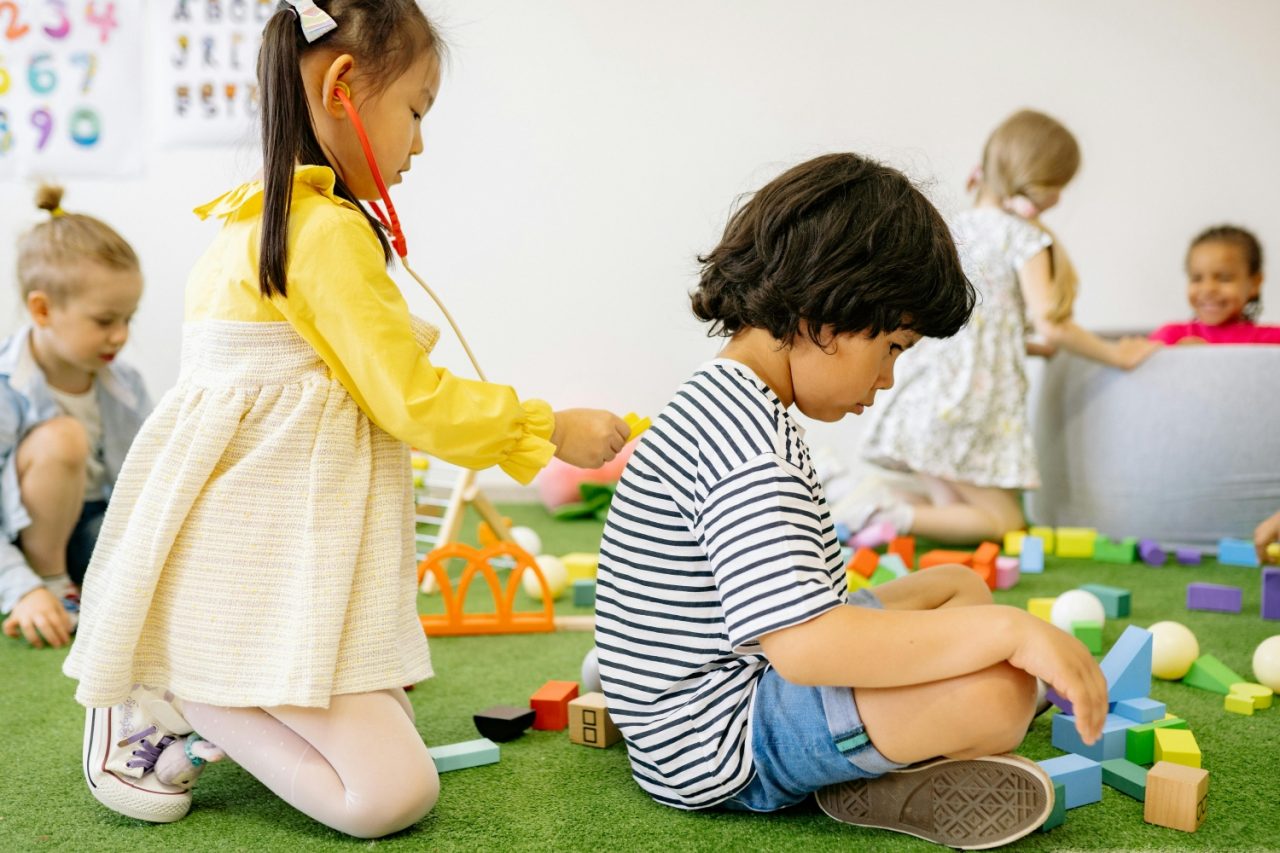
As many as 95% of children aged 5 – 6 in Singapore today attend preschool, but this wasn’t always the case. In earlier decades, preschool education was less prevalent, with many families opting for informal childcare or home-based learning.
Over the years, however, the recognition of the importance of early childhood education grew significantly, driven by research highlighting its benefits in cognitive, social, and emotional development.
Today, early childhood education is considered vital to provide a strong foundation, preparing children for the challenges and opportunities in the future. In this article, we’ll provide a brief synopsis of early childhood education in Singapore, delving into the various types, and how they differ.
What Preschool Options are Available in Singapore?
Preschool care encompasses a broad range of definitions in Singapore. In general, it is defined as education services for children under the age of 7. There are several types of preschool education in Singapore.
Singapore offers a wide variety of preschools, often distinguished by their educational methodologies, the age groups they cater to, and their operating hours.
All available preschool services in Singapore are overseen by the Early Childhood Development Agency (ECDA). The ECDA provides three types of licences to preschool operators based on the services they provide and age groups of their students.
Infant Care Centre (Class A Licence)
To qualify for a Class licence, an establishment should provide care for children aged between 2 to 18 months, for a full day from 7am to 7pm. Centres offering half day and flexible care schedules will also be considered. The establishment should also be open for at least 5 to 5 ½ days a week.
Child Care Centre (Class B Licence)
Child care centres are those that provide educational and care services for children aged between 18 months to 7 years. Parents may choose between full day or half day schedules. If they offer flexible schedules, they should be available for at least 12 hours a week, for at least 3 hours at a time.
Kindergarten (Class C Licence)
Kindergartens are institutions that operate only half days, and don’t provide full day care for children. They only need to be available 5 days a week, excluding weekends and follow the school holiday schedule set by the Singaporean Ministry of Education, with the exception of kindergartens that follow an international curriculum and academic year.
Preschools in Singapore fall into two categories when it comes to operators. There are Ministry of Education Kindergartens (MKs) and private preschool operators under the purview of the ECDA.
What is the Difference Between an MOE Kindergarten and a Private One?
The Ministry of Education kindergartens provide affordable preschool services for the children of Singaporean citizens and permanent residents. Subsidies are available for families in need who are eligible for such aid.
These services are provided via Anchor Operators and Partner Operator schemes. Under both these schemes, operators are subject to fee caps and quality requirements. Services are limited however, and parents can only send their children for four hour sessions, either from 8am to 12pm or 1pm to 5pm. If full day care is required, parents will have to register for the KCare programme, which is subjected to a different set of fees.
Private operators, on the other hand, while generally more expensive than MOE kindergartens, provide more comprehensive services and facilities. For those considering this route, you’ll be happy to know that the government offers subsidies to defray preschool costs.
In Conclusion
MindChamps PreSchool is a registered entity under the Singapore ECDA, and we offer care services for children aged 18 months until 6 years. Our centres are bright and cheerful spaces, with open and conducive classrooms where your child can receive a rich and holistic education.
Book a tour of a centre near you today, and understand more about our teaching styles and philosophies, including the Champion Mindset that we foster in each of our students.